
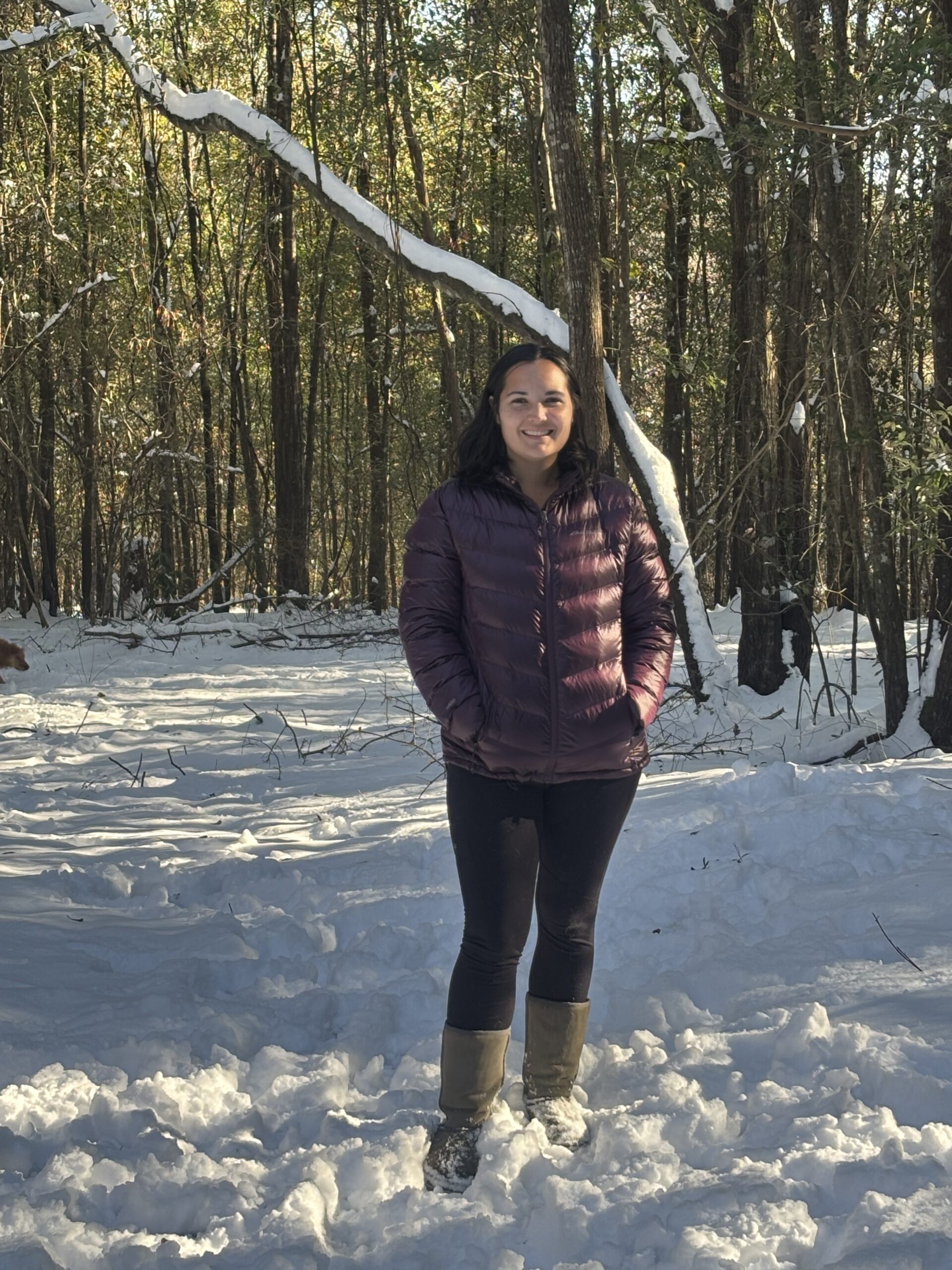
The Jones Center at Ichauway Landscape Ecology lab is proud to welcome Brittany LaPointe! LaPointe is currently working with the lab as a Remote Research Assistant, based out of the Dothan, Alabama area.
Brittany joined the lab after completing her MS research at Troy University and research internships studying wildland fire! Brittany’s past experience at using remote sensing to study large-scale disturbances has been a terrific asset to the lab as she has used them to scale up to evaluate restoration outcomes at the regional scale!
I asked Brittany to share more about herself and the work she is doing.
1. What got you interested in conservation of longleaf pine or ecology in general, and what’s your background in ecological research?
I grew up in the south and have always had a deep love for the species that live here. Initially I focused on biomedical research, however, it didn’t feel like the right fit so I took a few environmental science classes and the work really resonated with me.
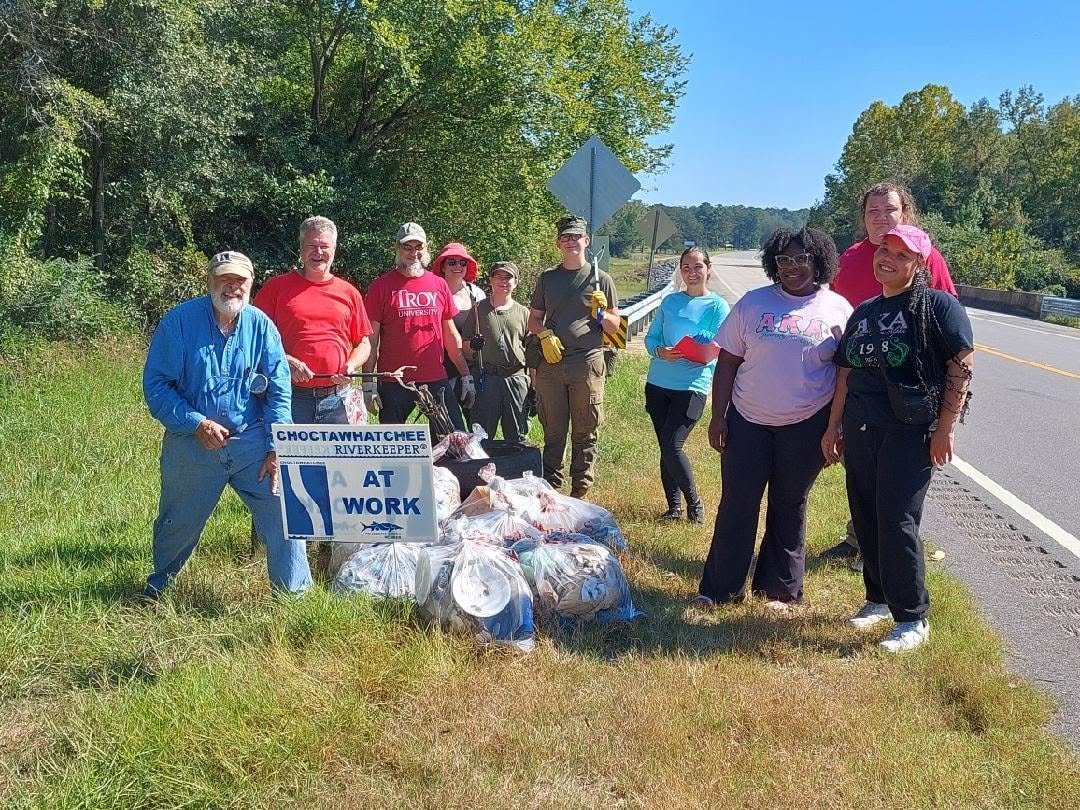
My background is a little unconventional because after finishing my Bachelors (2014) and Master’s (2017) in Biology from Troy University, I took several years off to be a stay-at-home parent. I stayed connected with local conservation groups, including volunteering with my local extension agency, Riverkeeper, and other similar organizations.
In 2023 I returned to school at the University of West Florida for continuing education in GIS and remote sensing where I completed a 10-month internship with USGS EROS as part of the Virtual Student Federal Service, and a NASA DEVELOP term in Summer 2025. The focus of my research through those programs was analyzing forest dynamics in coast redwood ecosystems (DEVELOP) and the Black Hills (USGS) after severe wildfire using remote sensing.
|
|
2. You are bringing some great remote sensing skills relevant to our research! Can you share more about the research you did prior to joining the lab?
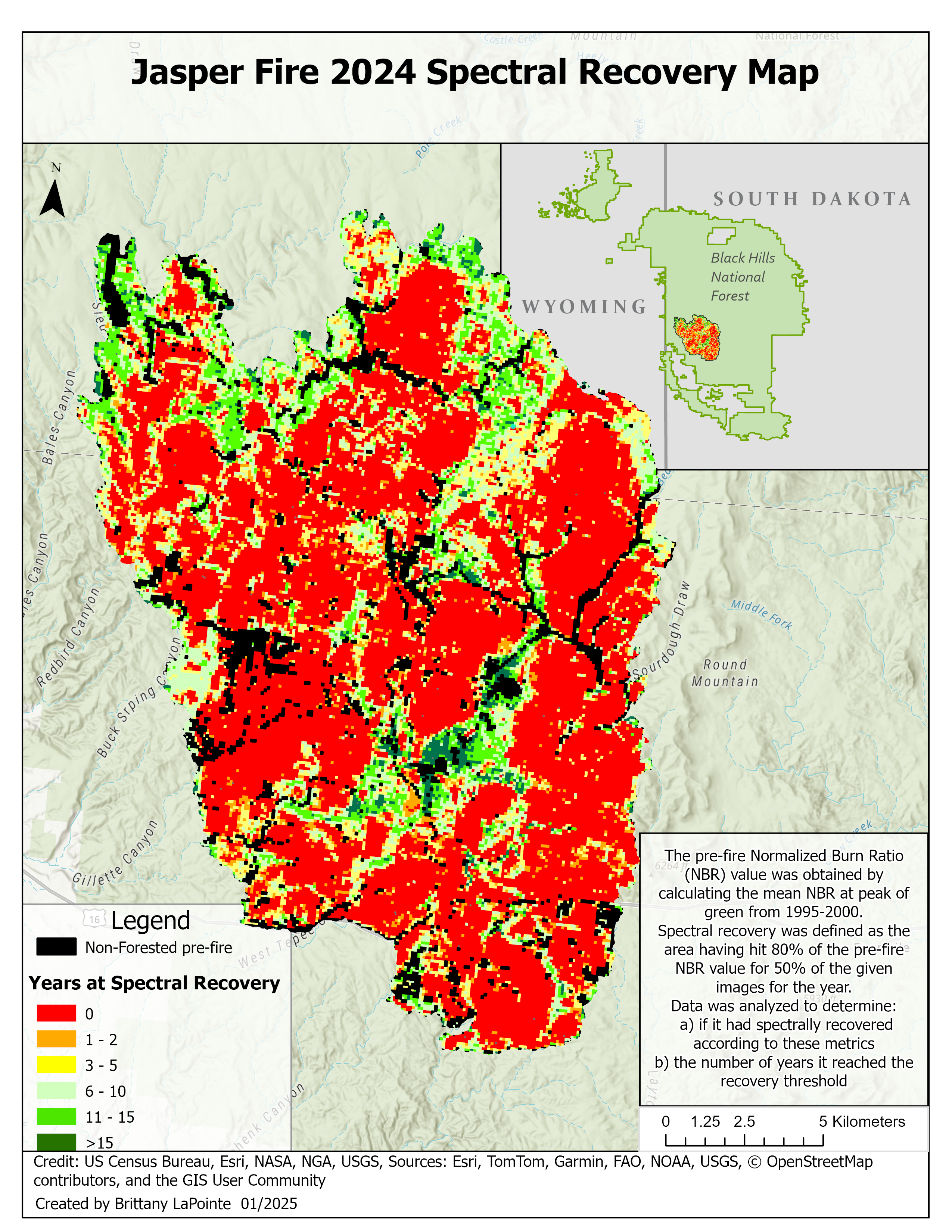
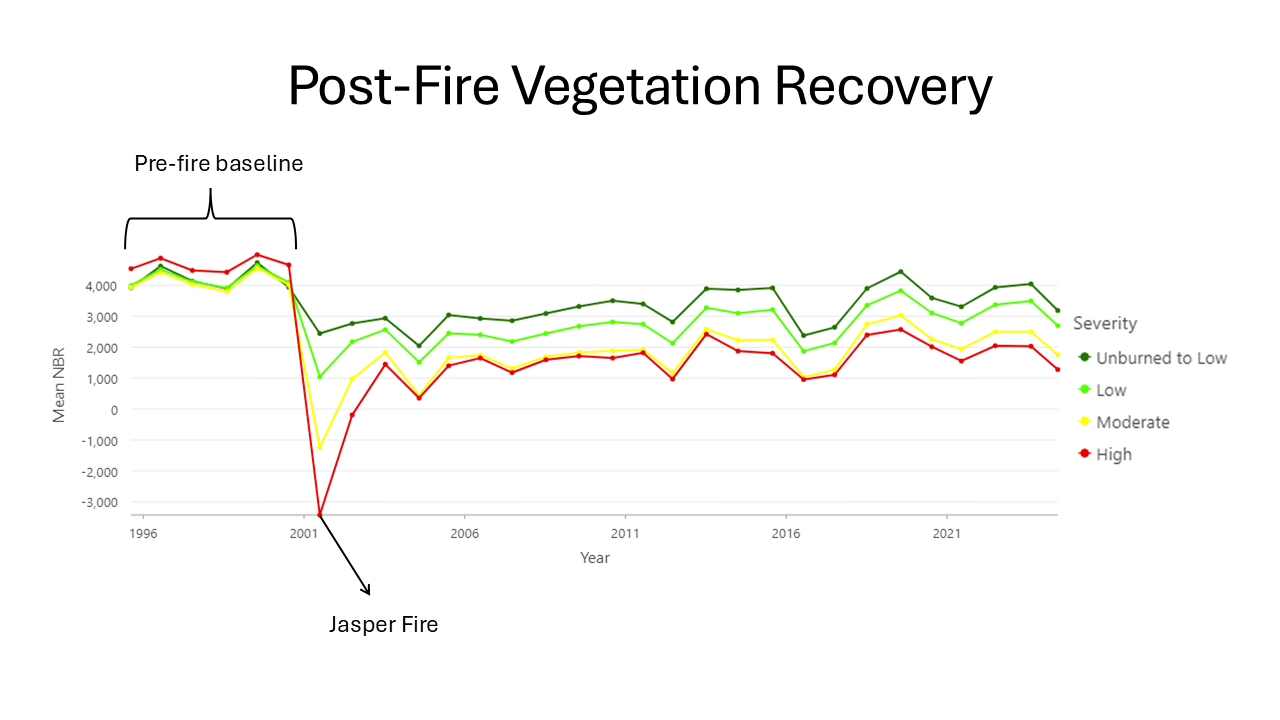
I was involved with two projects studying the long-term impacts of wildfire on forested ecosystems. For the Black Hills, I looked at long-term patterns of vegetation change after fire, studying spectral patterns from satellite imagery before and after fire across varying burn intensities following the 2000 Jasper Fire. Moderate and severe burn intensities still showed quite a bit of damage, but I was surprised to see that even 25 years after the fire, many areas classified as having low burn severity still showed spectral signatures well below their pre-fire state. Over 50% of the Jasper Fire burn scar still showed severe damage, and an additional 25% was just beginning to approach its pre-fire state. Only areas classified as unburned had returned to their pre-fire spectral range.
|
|
I also used a similar analysis in the Santa Cruz Mountains studying the impacts of the 2020 CZU wildfire. We looked at the impact of areas that were burned once, during CZU, and compared them to areas that had burned twice, once during CZU and prior to that during the 2009 Lockheed fire. We found that while areas that burned twice experienced a greater drop in NDVI initially following the fire, they experienced faster recovery towards the pre-fire values and even surpassed the areas that had only burned once.
3. What do you look most forward to accomplishing and learning with your team at the Jones Center?
I am excited to work with an organization that connects research directly to the people and organizations applying it in the field. I am looking forward to learning through collaboration and developing research and tools that drive conservation forward. I am also excited to get more experience working with lidar data!
4. What advice do you have for those considering a career in ecology, conservation, or academics?
I found so much value interning, volunteering, networking and connecting with other people in the field. I didn’t even know what remote sensing was when I began my GIS program. I thought I wanted to be a field biologist and maybe make some maps, but I ended up in a remote sensing internship and things really clicked for me, so I think it’s very important to expose yourself to as many opportunities as you can. Say ‘yes’ as often as possible!
5. What is one text you think of as a “must read,” including scientific papers, textbooks, or recreational reading?
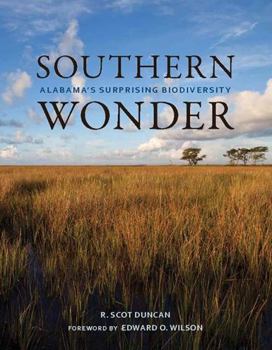
Southern Wonder: Alabama’s Surprising Biodiversity by R. Scott Duncan. This book was an assigned reading as part of the Alabama Master Naturalist program and I really enjoyed how it weaves together multiple disciplines including geology, evolution, and recent historical context, to explain how the different ecosystems were formed and the factors that are causing them to decline, in addition to discussing the rich biodiversity that is present. Even though it says Alabama in the title, many of the regions covered, such as the Gulf of Mexico and Southern Coastal Plains, span multiple southern states.