
New study: Patchy longleaf pine regeneration changes fuels and fire behavior
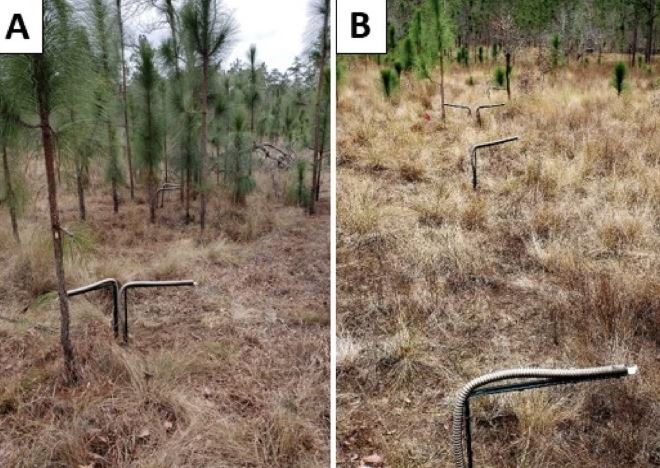
Longleaf pine ecosystems depend on frequent fire which changes competitive and growth dynamics of the ecosystem. However, fire behavior is complex and driven by complex feedbacks between fire effects, fuels, and vegetation. In an intensive field study, we investigated how dense patches of longleaf pine regeneration can change fuels and fire behavior compared to regenerating saplings occuring singly. We found that regeneration have altered fuels, and often reduced fire behavior in a manner that likely shapes spatial dynamics in the ecosystem
Fishes of the Flint River Basin
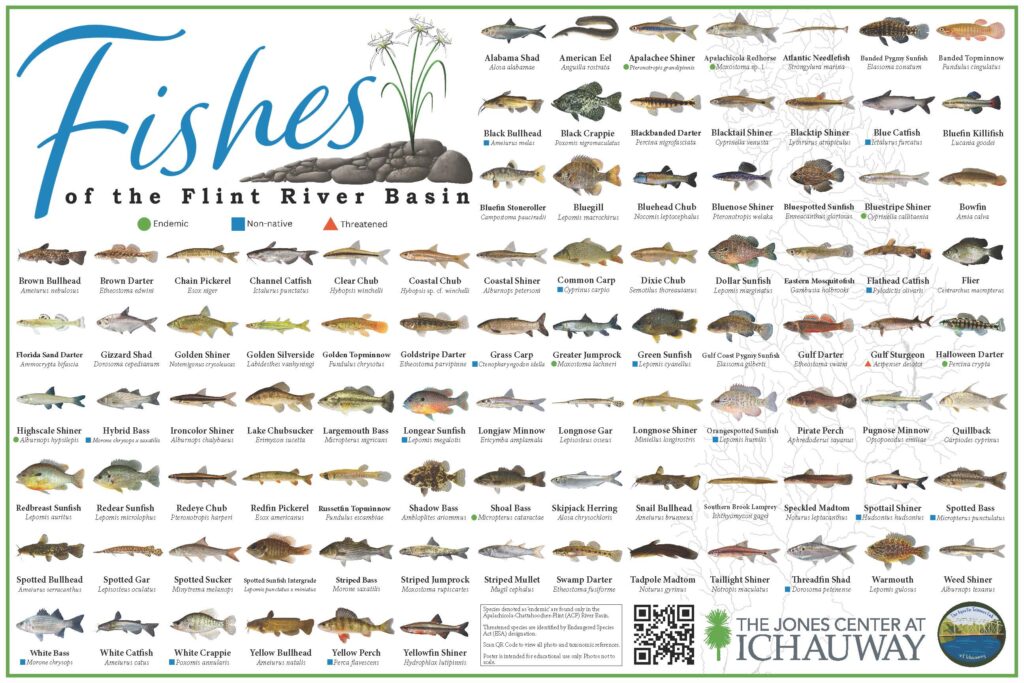
The Aquatic Sciences Lab at The Jones Center at Ichauway is excited to share a compilation highlighting the incredible fish diversity of the Flint River Basin. Using a wide range of sources, we identified 92 species of fish present in the Flint River Basin, including native, endemic, threatened, and non-native species. Species designations and ranges […]
Now recruiting: PhD Research Assistantship in Forest and Fire Ecology

We are seeking motivated individuals to apply for a PhD research assistantship in Forest and Fire Ecology. The research will combine field intensive fuel, fire behavior, and regeneration data collection, mapping and processing, and capitalizing on existing and new data from the Ichauway Forest Dynamics Plot at the Jones Center. The student will be appointed as a Graduate Research Assistant (GRA) but will assist with teaching undergraduate courses in Forest Fire Management and Forest Ecology. Although a PhD student at Auburn University, the student’s work will be co-sponsored by the Jones Center at Ichauway. Applications reviewed February 28, 2025.
Lab’s mesophication work featured on Fire Ecology Chats Podcast (Ep. 37)
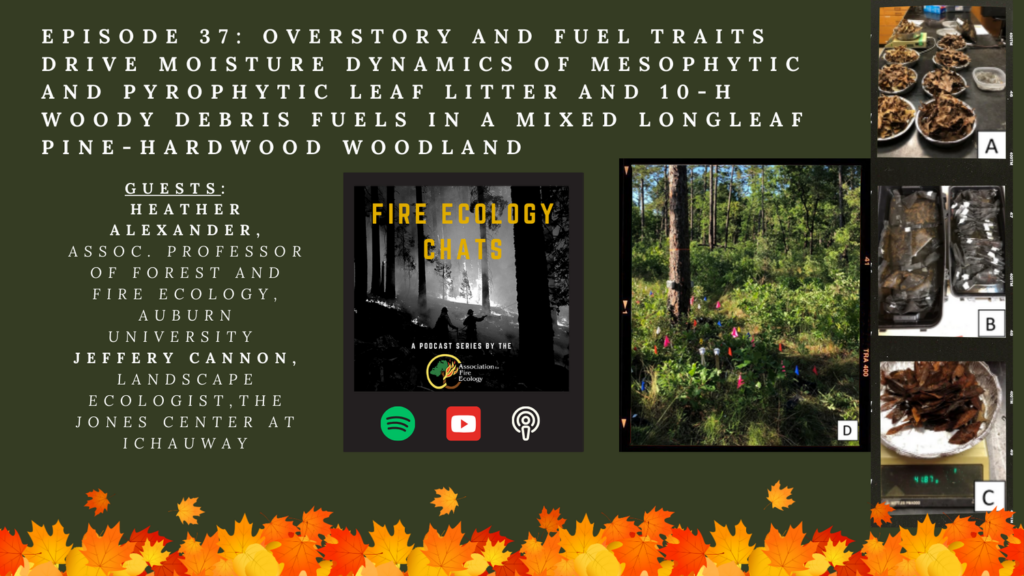
In this episode of Fire Ecology Chats, Fire Ecology editor Bob Keane speaks with Heather Alexander and Jeffery Cannon about reintroducing fire into mixed longleaf pine-hardwood woodlands, and how that will be affected by the shade-tolerant, fire-sensitive species that have grown during periods of fire exclusion.
Ichauway: Rainfall Wrapped 2024
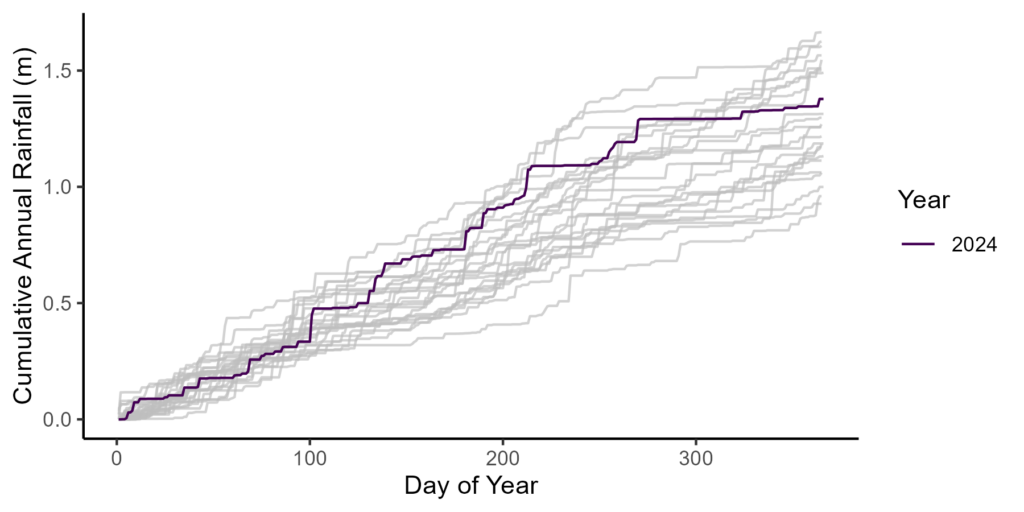
Happy New Year from the Aquatic Sciences Lab! The lab celebrates our first-year anniversary this month and we are looking both backwards at a busy 2024 and forwards to an exciting 2025. We will be making our way to you at conferences and welcoming new lab members and graduate students (more to come soon!). As […]
Now hiring: Landscape Ecology Geospatial Analyst

We are seeking motivated individuals to apply for a Geospatial Analyst position to contribute to research and development that will improve forest conservation efforts in the southeastern US. Both remote and in-person candidates will be considered. The successful applicant will integrate cutting edge technologies (UAV and lidar), field experiments, and data science techniques to contribute to collaborations with conservation agencies and research partners. The position will work in a team setting with staff of the Landscape Ecology lab at the Jones Center at Ichauway. Applications reviewed immediately.
Seed collection efforts expand
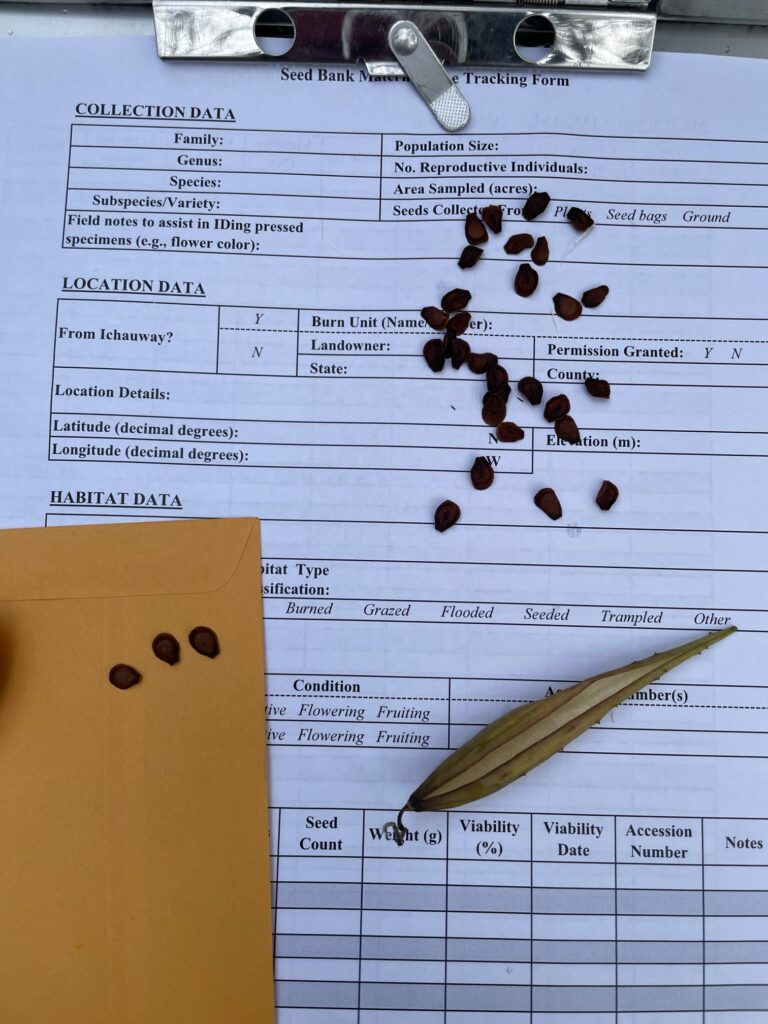
The Jones Center became an Institutional Partner of the Center for Plant Conservation (CPC) in 2024 and collaborated with CPC and the Florida Natural Areas Inventory to make our first-ever seed collections in Florida as part of the Florida Plant Rescue (FLPR) program. FLPR’s goal is “to secure and safeguard Florida’s rare plant species in […]
Side-Scan Sonar Training with USFWS
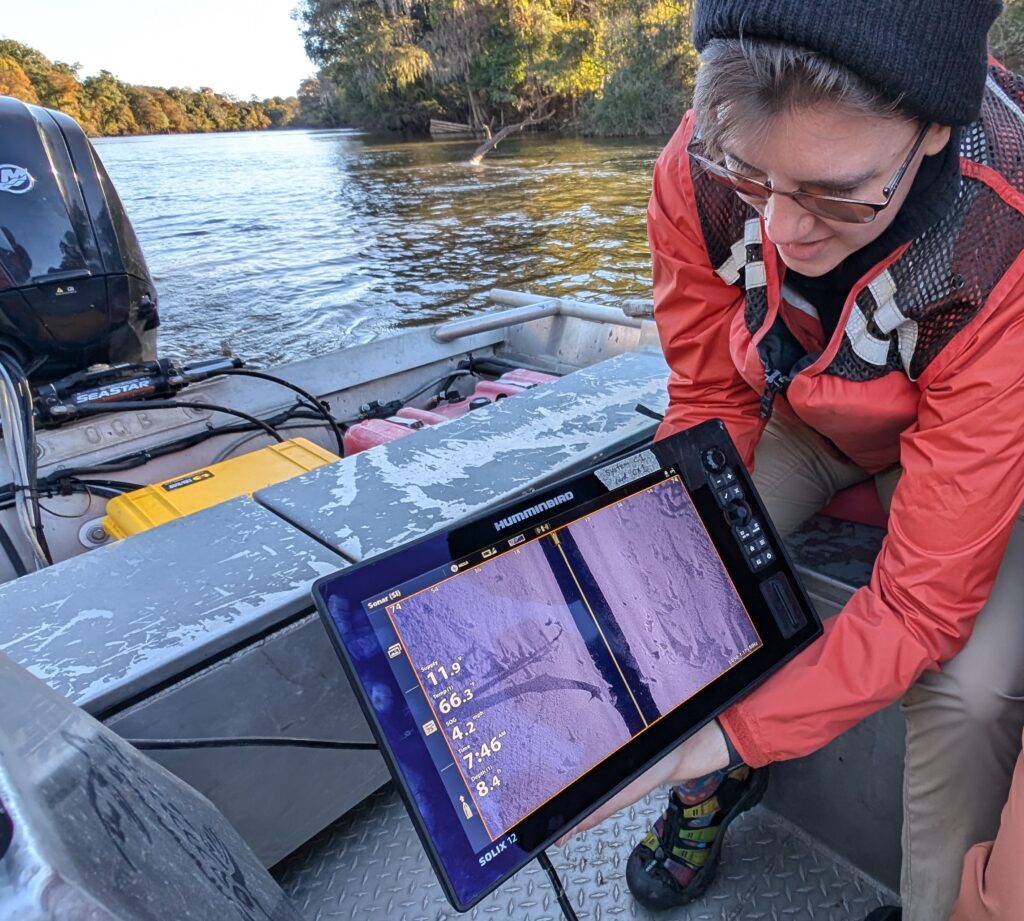
Last month we had the privilege of hosting Dr. Adam Kaeser and Jake Roush of the Panama City US Fish and Wildlife Conservation Office. Adam is currently the Gulf Sturgeon Recovery Lead for the Service but has roots here in the lower Flint River basin (LFRB) after starting his research career as a Fisheries Biologist […]
Lab’s fire research featured on Fire Ecology Chats Podcast (Ep. 36)
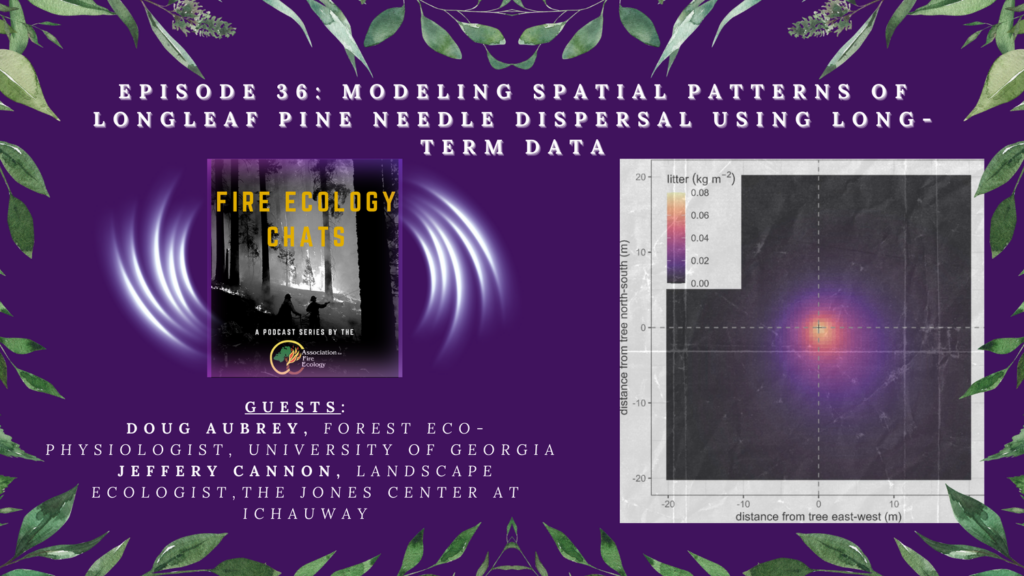
In this episode of Fire Ecology Chats, Fire Ecology editor Bob Keane speaks with Doug Aubrey and Jeffery Cannon about better predicting the leaf litter component in a pine forest to better understand how fire might move through forests under different management scenarios.
Wrapping a Busy Fall in the Aquatic Sciences Lab
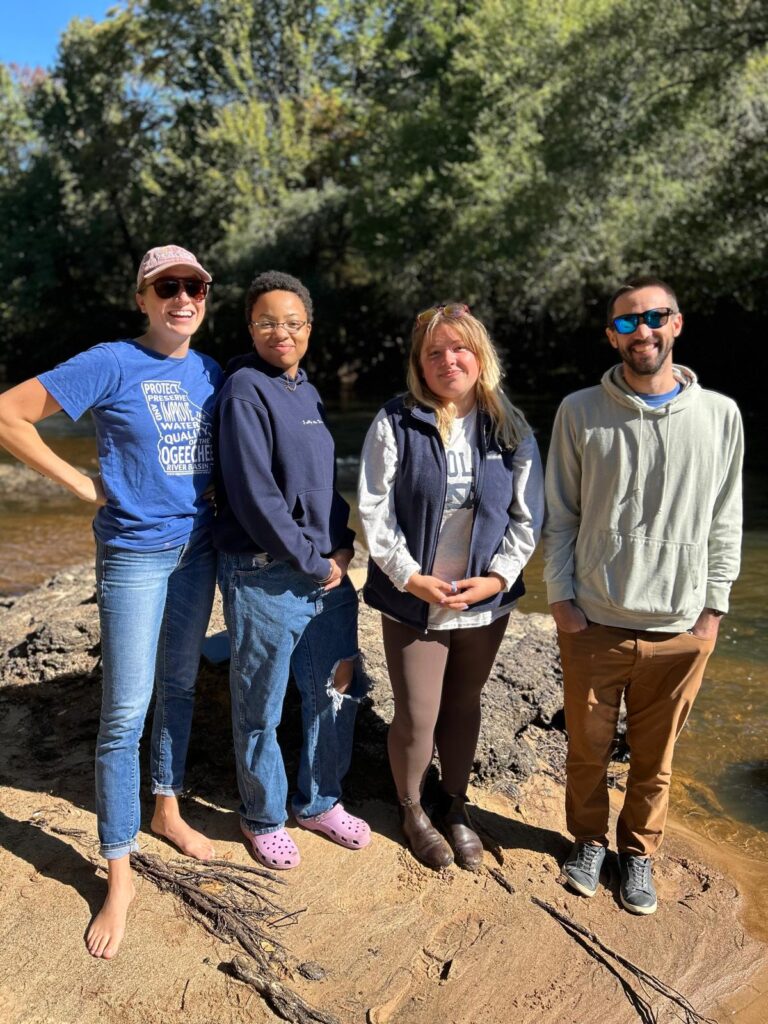
The Aquatic Sciences Lab at the Jones Center is happily exhausted on this first proper cold day in SW GA! As we near the end of the lab’s first year, we have made lots of progress and collaborations to report on, many happening in the last few weeks. We have our first exchange of personnel […]