
Jeffery Cannon Receives 2026 Emerging Leader Award from The Longleaf Alliance
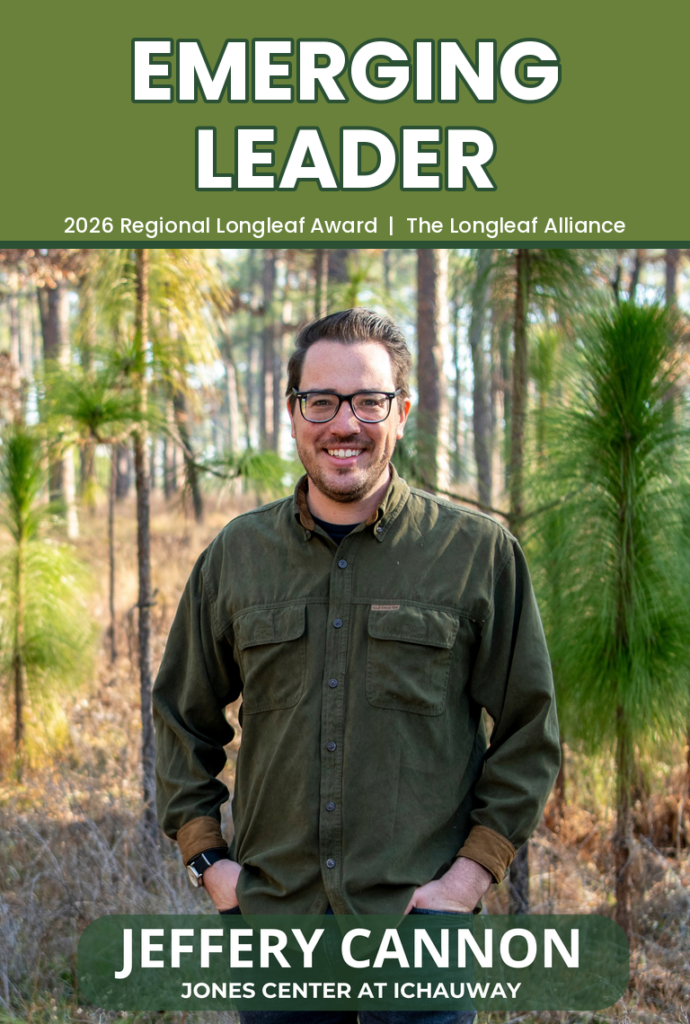
Dr. Jeffery Cannon, landscape ecologist at the Jones Center at Ichauway, has received The Longleaf Alliance’s 2026 Emerging Leader Award. The Alliance recognized his research on how hurricanes influence longleaf pine cone production and regeneration, along with his work in ecological forestry and accessible training tools, including interactive forestry simulations. The award will be presented at the 16th Biennial Longleaf Conference in Williamsburg, Virginia, October 27-30.
Landscape Ecology Lab welcomes Brittany LaPointe
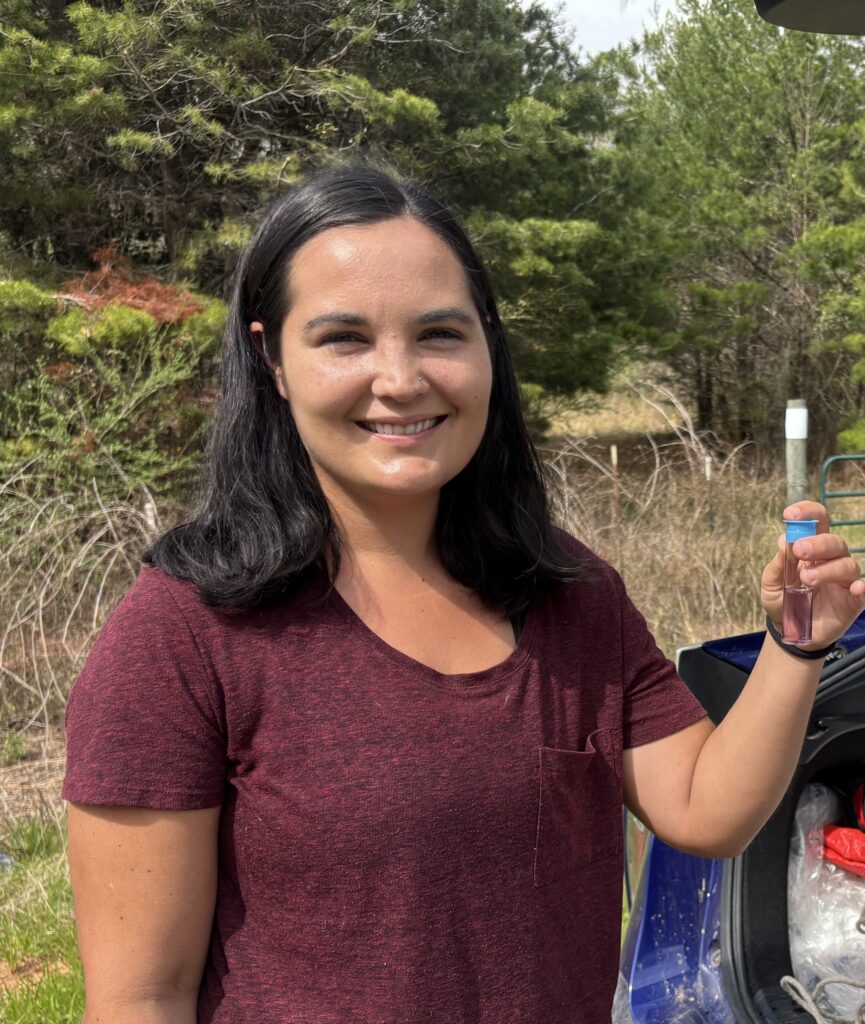
The Landscape Ecology Lab welcomes Brittany LaPointe as a Remote Research Assistant based in Dothan, Alabama. Brittany brings remote sensing experience from USGS EROS and NASA DEVELOP internships, where she studied post-fire vegetation recovery in the Black Hills and California’s Santa Cruz Mountains. At the Jones Center, she’ll apply that expertise to evaluate longleaf pine restoration outcomes at a regional scale and expand her skills working with lidar data.
Landscape Ecology Lab welcomes Nathan Moore

Nathan Moore joins the Jones Center at Ichauway Landscape Ecology Lab as a PhD student at Auburn University, where he is co-advised by Dr. Heather Alexander and Dr. Jeffery Cannon. After completing his MS in Natural Resource Ecology and Management at Oklahoma State University, Nathan brings research experience in soil carbon, rangeland ecology, fire, and landscape-scale disturbance to the lab’s work on longleaf pine and mixed oak ecosystems.
Hurricanes, Longleaf Pine, and the Science of Resilience — 5 years of hurricane research
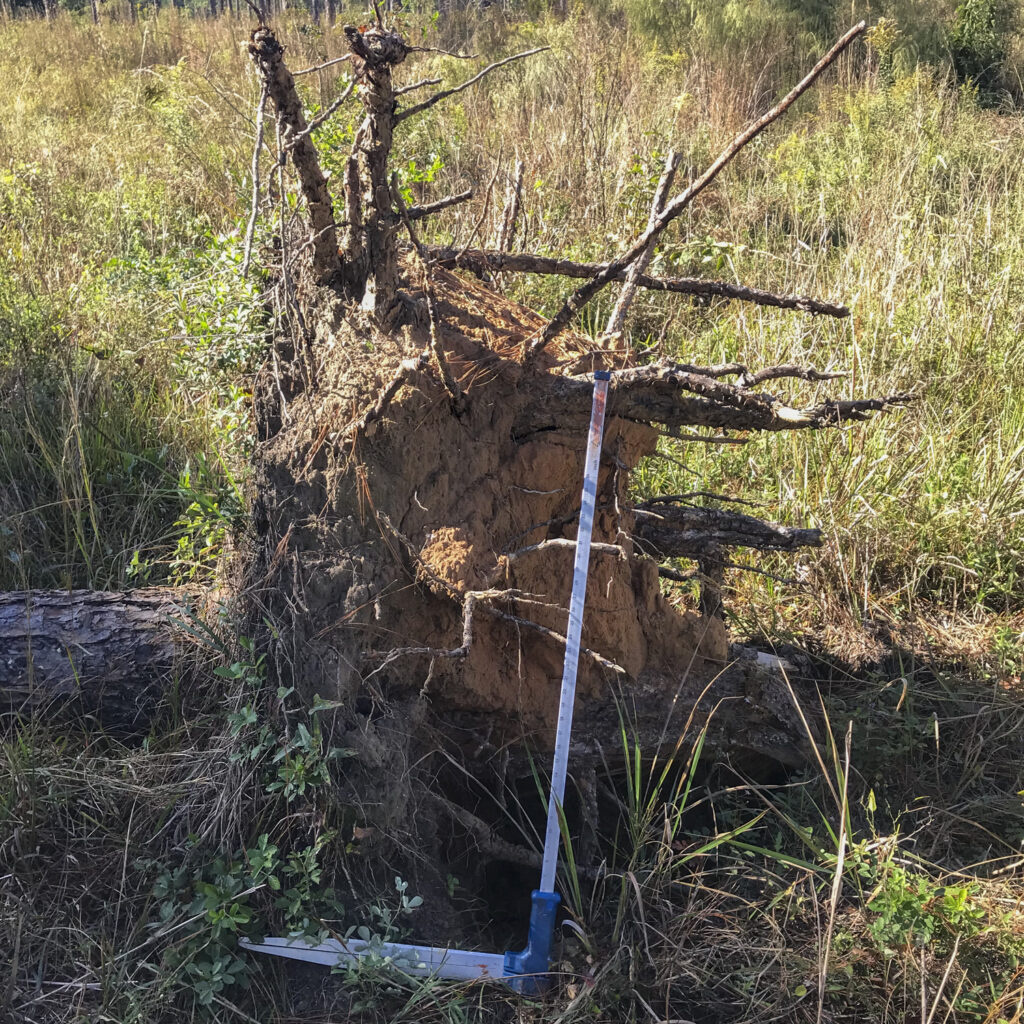
Longleaf pine has weathered hurricanes for millennia and is one of the most windfirm southern pine species. But resistance is only part of the story — our research shows storms also trigger surges in cone production, open canopy gaps that favor longleaf regeneration, and create microhabitats used by dozens of vertebrate species. We’ve also mapped hurricane wind regimes across North America to help guide long-term conservation planning as storm patterns shift with climate change. Check out this short feature on our hurricane ecology research.
UGA Today highlights lab’s research on smoke emissions from prescribed fire
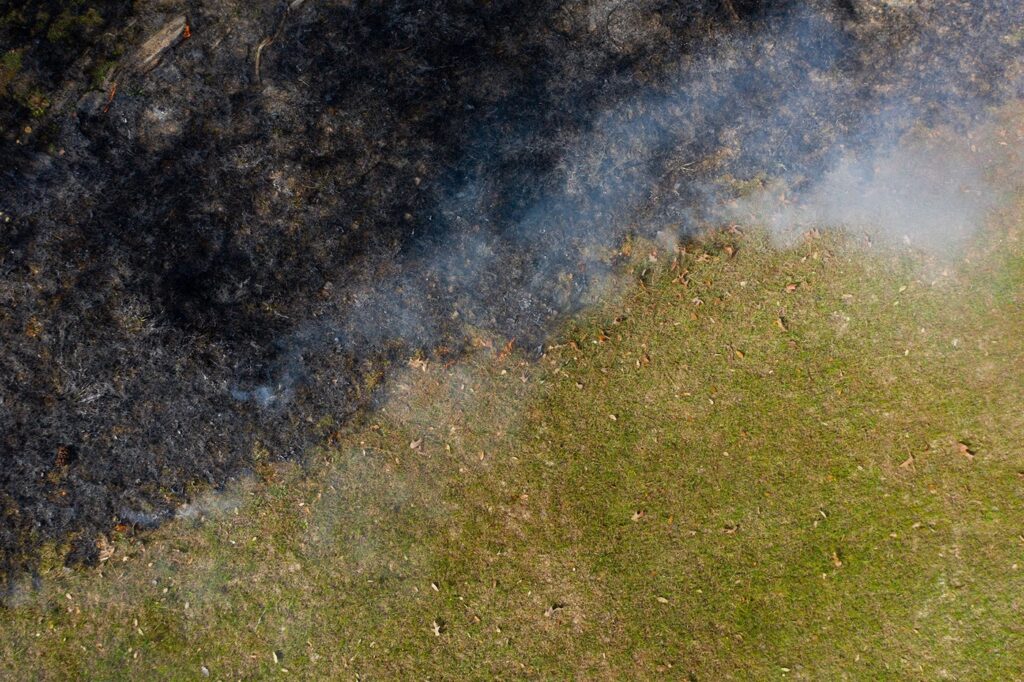
UGA Today recently covered new research quantifying how prescribed fire smoke affects air quality across the Southeast. The study found prescribed burns account for over 20% of regional fine particle pollution, with Georgia seeing the most smoke-impacted days of any state studied. Jones Center scientist Jeffery Cannon co-authored the work, which used burn permit records to model smoke exposure more accurately than satellite data alone — helping land managers balance fire’s conservation benefits with community health.
Podcast: Hurricanes and Forest Ecology | Timber University Podcast, Ep. 41
Recently Dr. Jeffery Cannon joined the Timber University podcast to discuss the lab’s hurricane research in longleaf pine ecosystems. The conversation covers how storms shape forest structure, stimulate reproduction, and reinforce fire regimes — and how lidar is helping researchers quantify these impacts. The episode also touches on managing for resilience and what disturbance ecology means for landowners and restoration practitioners.
New Study: Modeling smoke exposure from burn permits
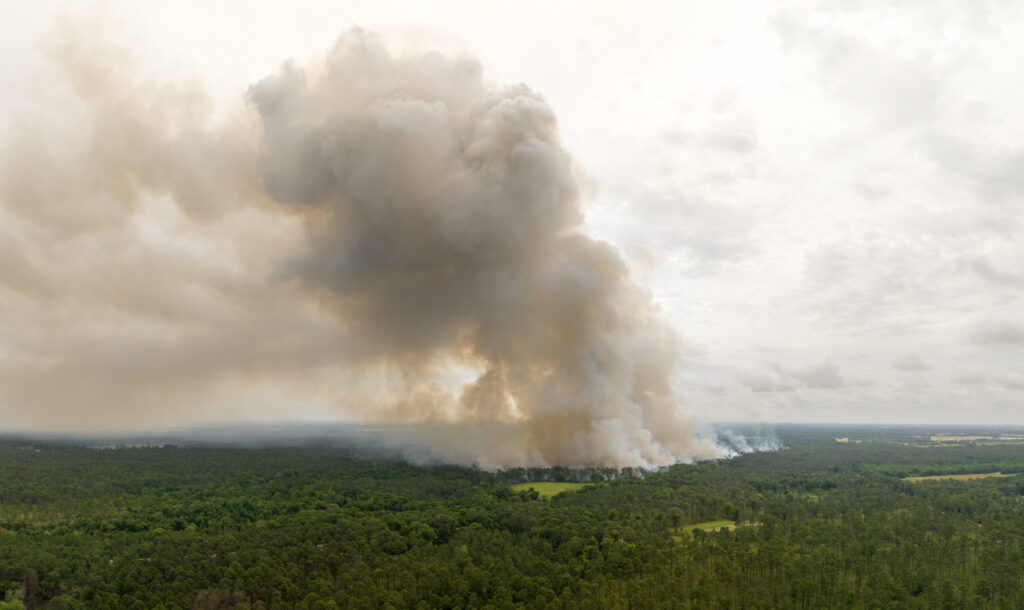
Prescribed fire is essential for forest management, but estimating its smoke impacts remains a challenge. Our lab contributed to a new study creating a novel way of estimating smoke exposure from burn permit geodatabases by integrating them with atmospheric and chemical transport models to improve PM2.5 estimates from Rx burns. The permit-based approach captures small, short-lived burns often missed by satellites and allows exploring new ways to reduce smoke emissions overall
“Piloting” metrics for monitoring biodiversity credits

The first U.S. biodiversity credits were sold in May 2025 for longleaf pine restoration, signaling a new market to support conservation. The Landscape Ecology Lab is pioneering streamlined monitoring protocols using drones and terrestrial lidar to measure vegetation structure in longleaf ecosystems. This cost-effective approach could make biodiversity credits more accessible to small landowners and provide viable financial incentives for conservation work.
ForestSAT2026: Special Session: Applying New Technologies to Forest Hurricane Research
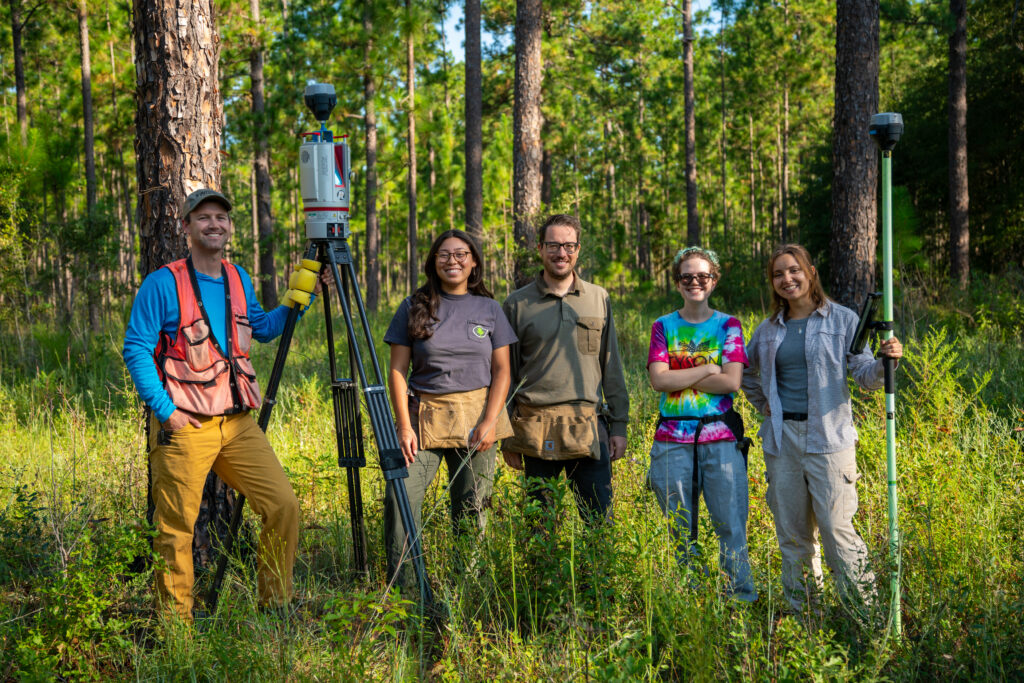
The Jones Center Landscape Ecology Lab is hosting two sessions on hurricane-resilient forests at ForestSAT2026 (May 4-8, Gainesville, FL). Eight presentations showcase terrestrial lidar, UAV, and satellite remote sensing innovations for understanding forest resilience to intensifying tropical cyclones. Researchers from across the southeastern United States will present cutting-edge work on hurricane-adaptive canopy traits, wind disturbance impacts, damage assessment using deep learning, and ecological recovery.
New Study: Spaceborne lidar advances global forest monitoring
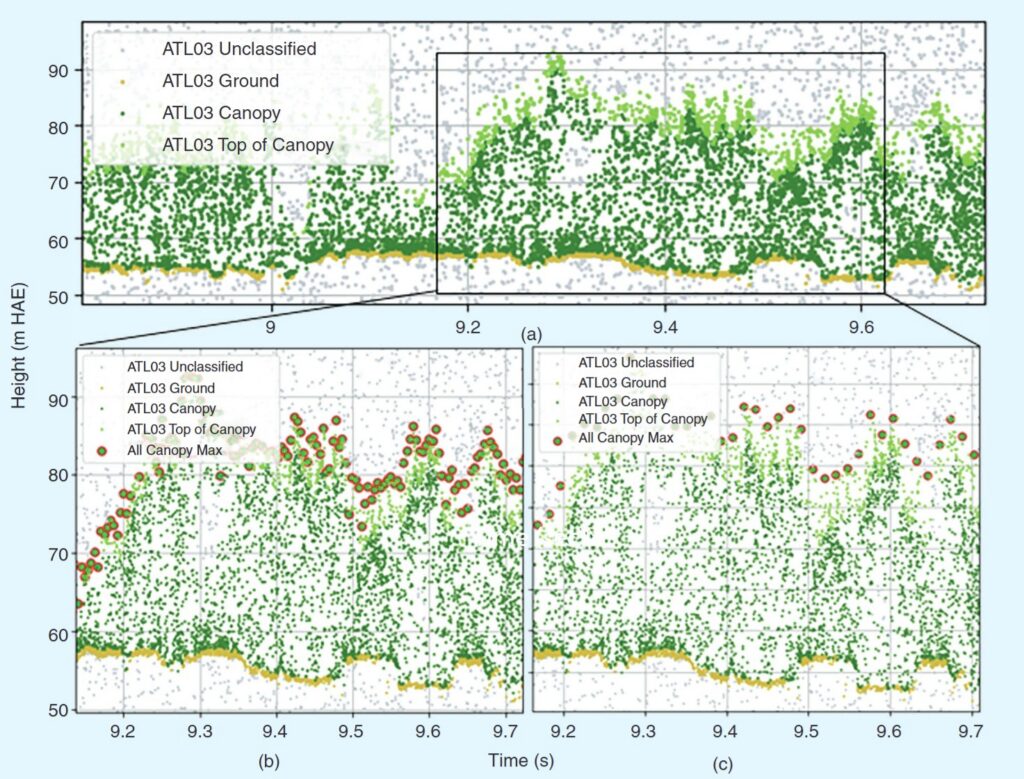
The Jones Center Landscape Ecology lab joined a global research team to synthesize research on NASA’s ICESat-2 spaceborne lidar mission and its applications for forest vegetation monitoring beyond its initial mission for ice monitoring. The team analyzed 293 studies and identified both current uses and emerging opportunities for combining satellite data to better understand forests, fire ecology, and environmental change.