
The Jones Center at Ichauway Landscape Ecology lab is proud to welcome Nathan Moore! Moore is a PhD student at Auburn University, co-advised by Dr. Heather Alexander and Dr. Jeffery Cannon. Nathan joins the lab after completing his MS in Natural Resource Ecology and Management at Oklahoma State University.
Moore’s MS work addressed how variability in soil carbon storage is driven by landscape heterogeneity such as differences in soil characteristics, vegetation, and groundwater. Moore’s research experience in frequent fire systems will complement the lab’s efforts in understanding what drives the patchy structure of longleaf pine and mixed oak ecosystems.
I asked Nathan to share more about himself and the work he is doing.

1. What got you interested in conservation of longleaf pine or ecology in general?
I’ve been interested in ecology for as long as I can remember. Most of the credit probably goes to an uncle of mine who was a wildlife biologist who shared fun stories about floating rivers and camping while running wildlife surveys. Briefly, during my undergraduate work, I was pulled away from ecology and started out in animal science. However, I returned to ecology once I realized that learning about the natural world was where my real interest lay, and I finished my degree in natural resource ecology and management.
2. How long have you been working in ecology? What is your background with ecological research? Or anything you want to share about your background in general?
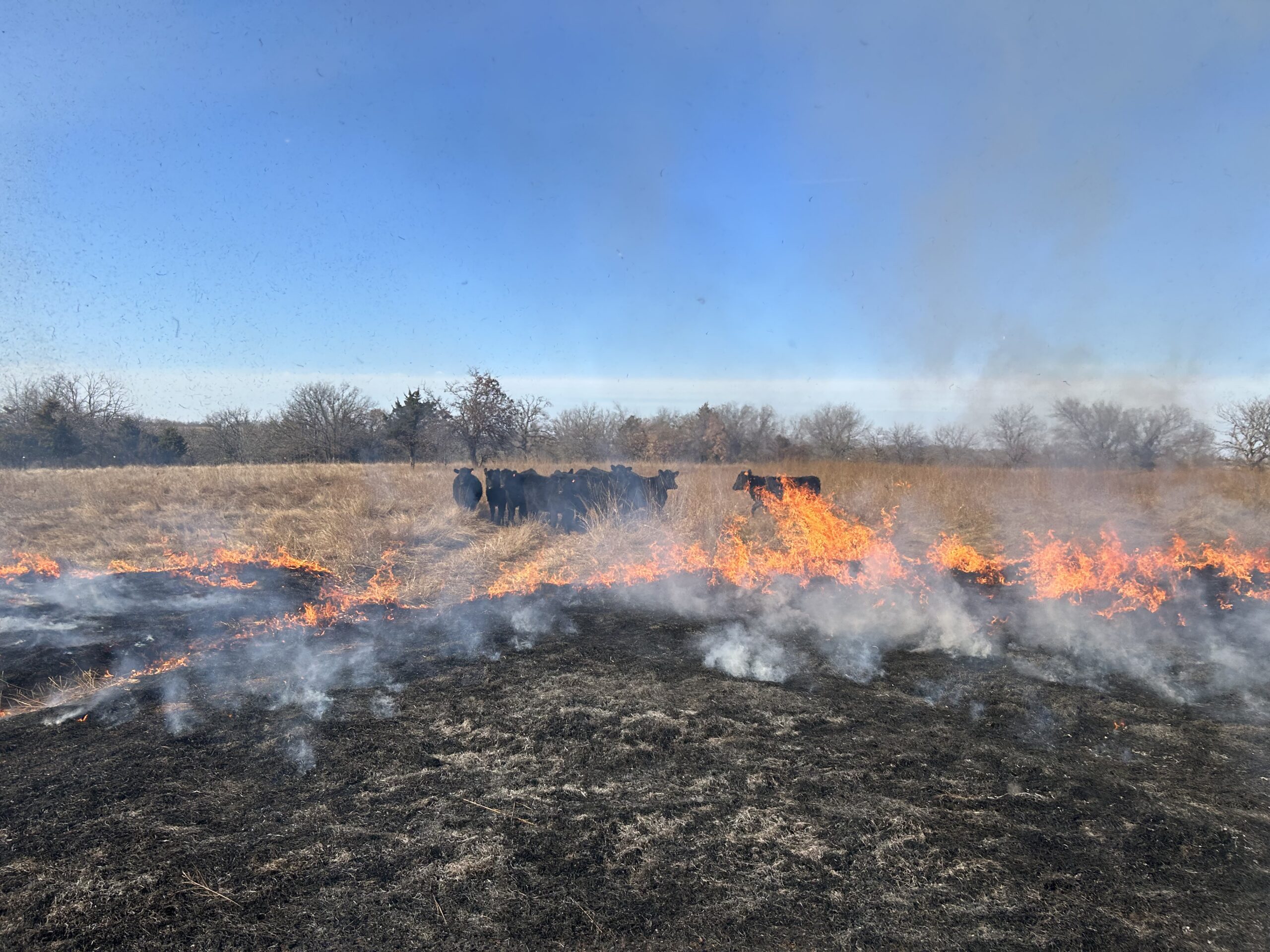
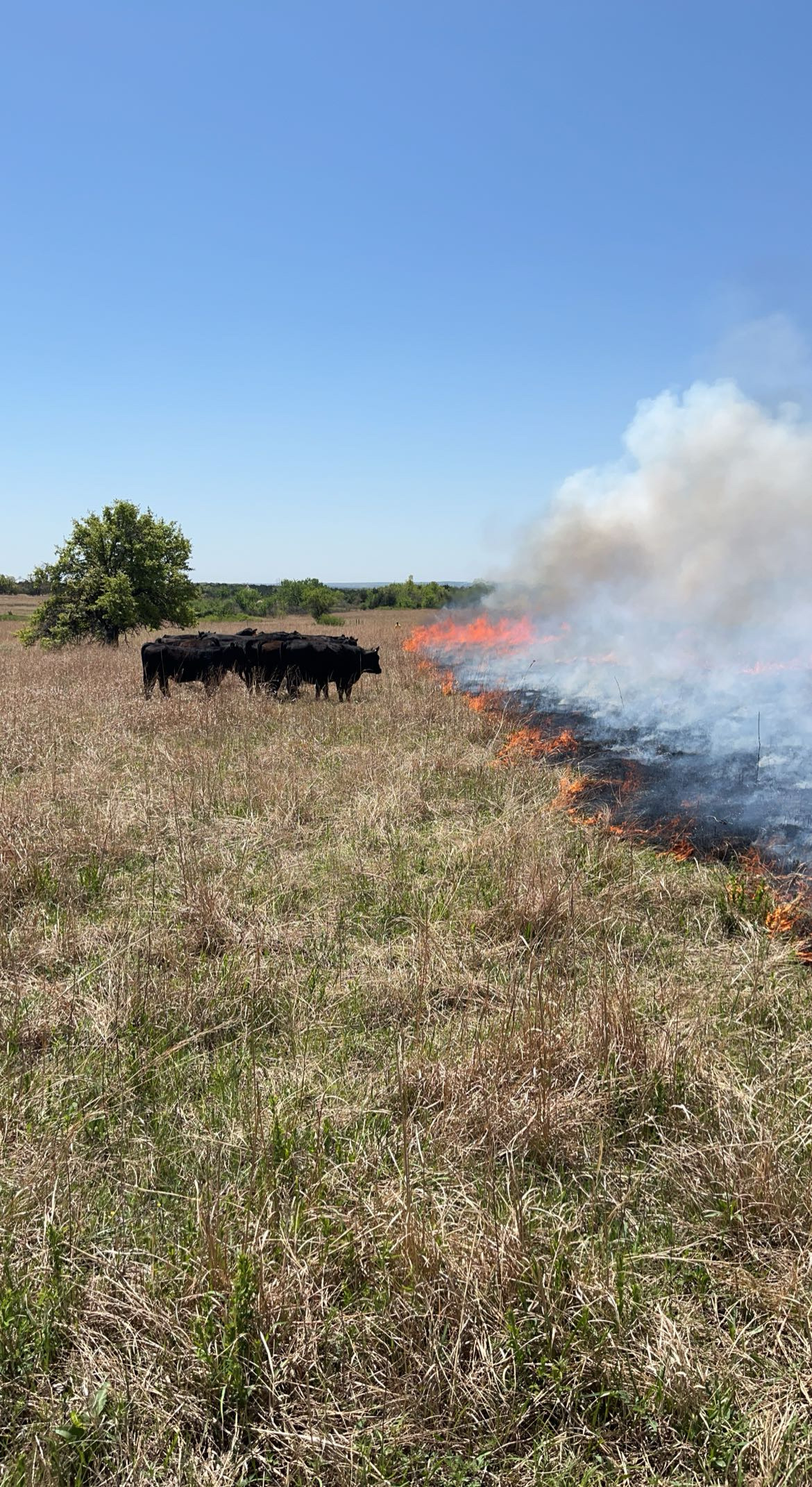
I’m still fairly new to the field. Over five years ago, I started working in undergraduate technician positions across several areas of ecology, beginning with an internship with the Oklahoma Department of Wildlife Conservation, where I assisted with paddlefish research. My interest in fisheries led me to a technician position on an aquaponics project that blended my interest in interconnected systems and animal production. After that, I landed a rangeland ecology position helping a graduate student with research on pyric herbivory and woody plant encroachment. The last job was where it clicked: understanding how a landscape functions under different disturbance regimes is where my interest lies and what I want to build a career around. I have since finished my MS, and alongside my thesis I helped with a range of other projects, including woody plant encroachment and microclimates, methods of measuring rangeland vegetation structure, pyric herbivory and mixed-species grazing, and more.
3. What was the focus of your MS research? What is one of the most important or impactful findings from that work?
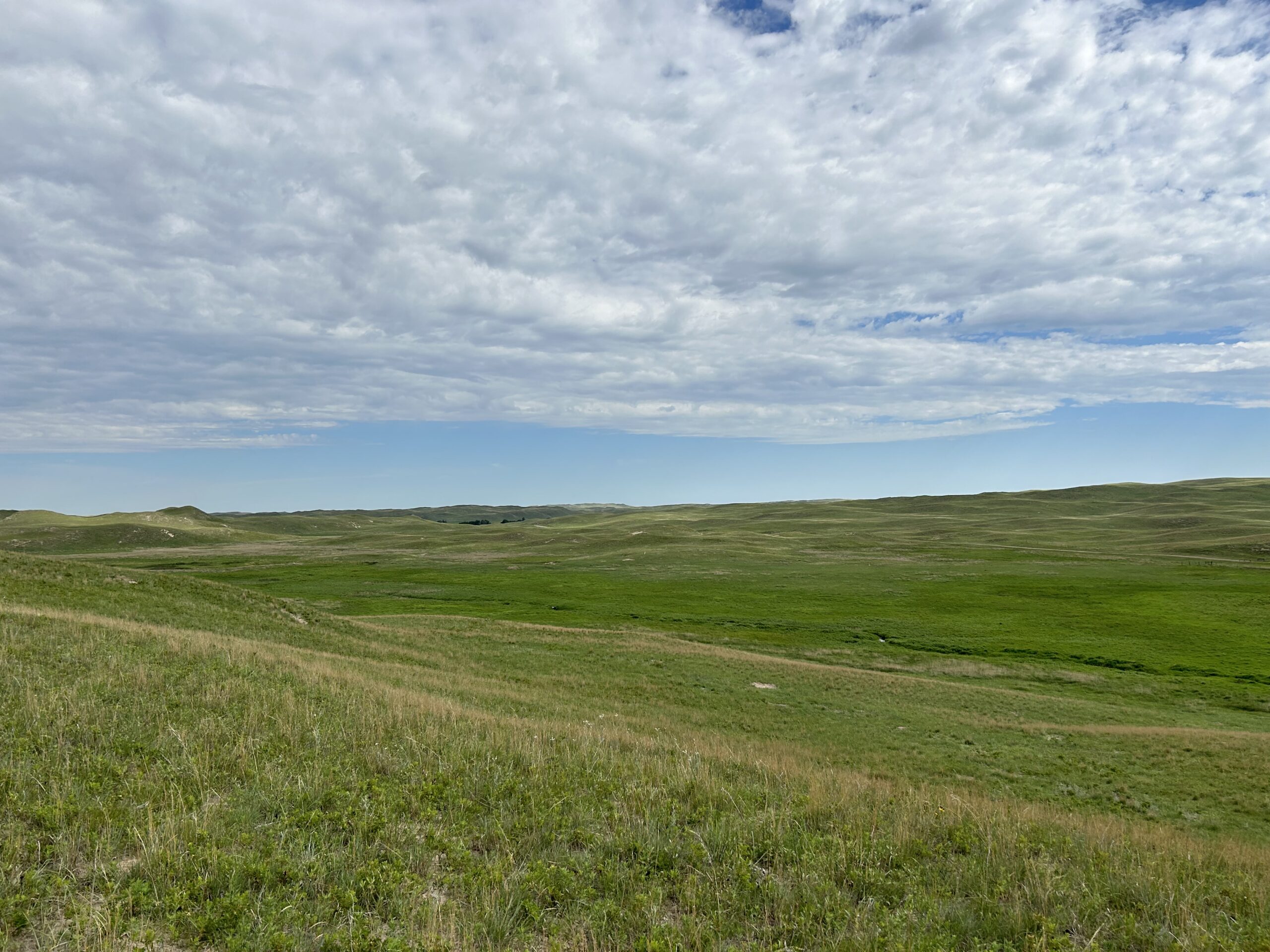
My MS at Oklahoma State University looked at soil carbon stocks in the Nebraska Sandhills, a grassland system where sandy soils, interdunal wetlands, and rolling dune topography make carbon storage highly variable over short distances. I sampled across working ranches spanning a gradient of wet meadows and upland dunes to ask how much carbon these soils hold and what drives the variation between sites. The clearest finding was that soil texture governed storage, imposing a constraint on how much of the vegetation input a site could retain. Two pastures under similar management, or even two points within a single pasture, can hold very different amounts of carbon depending on the soil beneath them. That matters for how rangelands are treated in carbon accounting and for where management effort goes, since work aimed at building carbon will pay off more where the soil can actually hold the gains.
4. What do you look most forward to accomplishing and learning with your team at the Jones Center?
I’m most looking forward to extending my knowledge base to a new ecosystem and learning from people with incredible academic and lived experience working in the heart of the longleaf pine savannah. I’m also excited to learn how this team uses tools and applications I haven’t worked with before, particularly drone-based data collection and the range of ways this group is using lidar to describe forest structure.
5. What advice do you have for current graduate students and for those considering a career in ecology, conservation, or academics?
If you’re looking to start a graduate program in ecology, don’t expect one to fall in your lap, and don’t chase a position based on location. Look hard at the faculty and advisors you’ll be working with, and make sure the project is something you’re not just interested in but passionate about. If the people supporting you are good and it’s a project you can see yourself loving, you’ve set yourself up to succeed. I’d also say don’t expect everything to work the first try. Science is a messy process, things will go wrong, and the projects that get finished are the ones where you have a plan but stay flexible.
6. What is one text you think of as a “must read,” including scientific papers, textbooks, or recreational reading?
There is no single must-read text, but the people who started me on my academic journey would be disappointed if I didn’t name Nathan Sayre’s The Politics of Scale: A History of Rangeland Science. It walks you through the history of rangeland science and how it has both shaped and been shaped by bureaucracy and political movements. I’d also recommend David Montgomery’s Dirt: The Erosion of Civilizations, which highlights how rooted our world is in soil and how dependent we are on it for success. For casual reading, I’ve enjoyed most of John Steinbeck’s works.