
Building hurricane-resilient longleaf pine forests
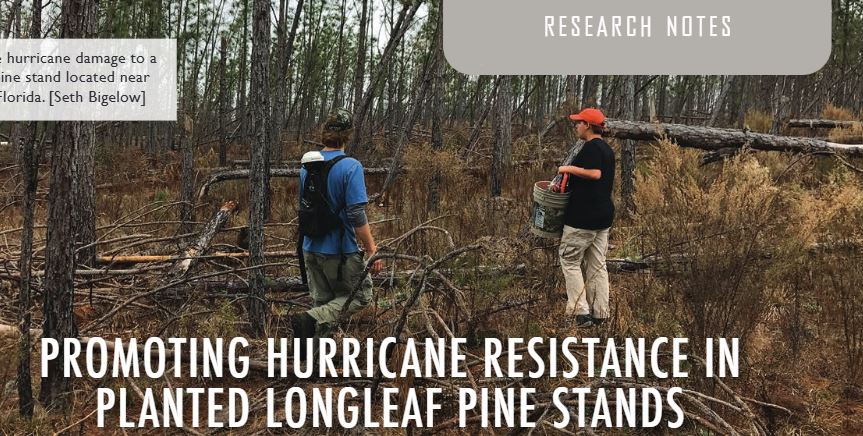
The Longleaf Leader recently featured our research published in Forest Ecology and Management, which guides how landowners can help longleaf pine forests withstand hurricanes. By managing stand density, encouraging tree taper, and maintaining landscape connectivity, planted longleaf stands can be made more wind-resistant, highlighting practical steps to ensure restoration efforts endure in a hurricane-prone future. Check it out on the Longleaf Alliance website
New study: Advancing hurricane ecology in endangered systems

Longleaf pine savannas are iconic and endangered ecosystems along the Gulf and Atlantic coasts, but intensifying hurricanes pose a growing threat to their persistence. Our team reviewed storm impacts across the longleaf range and found that 85% of remaining habitat experiences tropical storm-force winds every six years. We identified key risk factors—like fire, insects, and salvage logging—that can compound management challenges and delay recovery. This study, published in the journal BioScience highlights the need for climate-informed management strategies that build resilience in the face of increasingly frequent storms.
New study: Mitigating hurricane damage in pecan
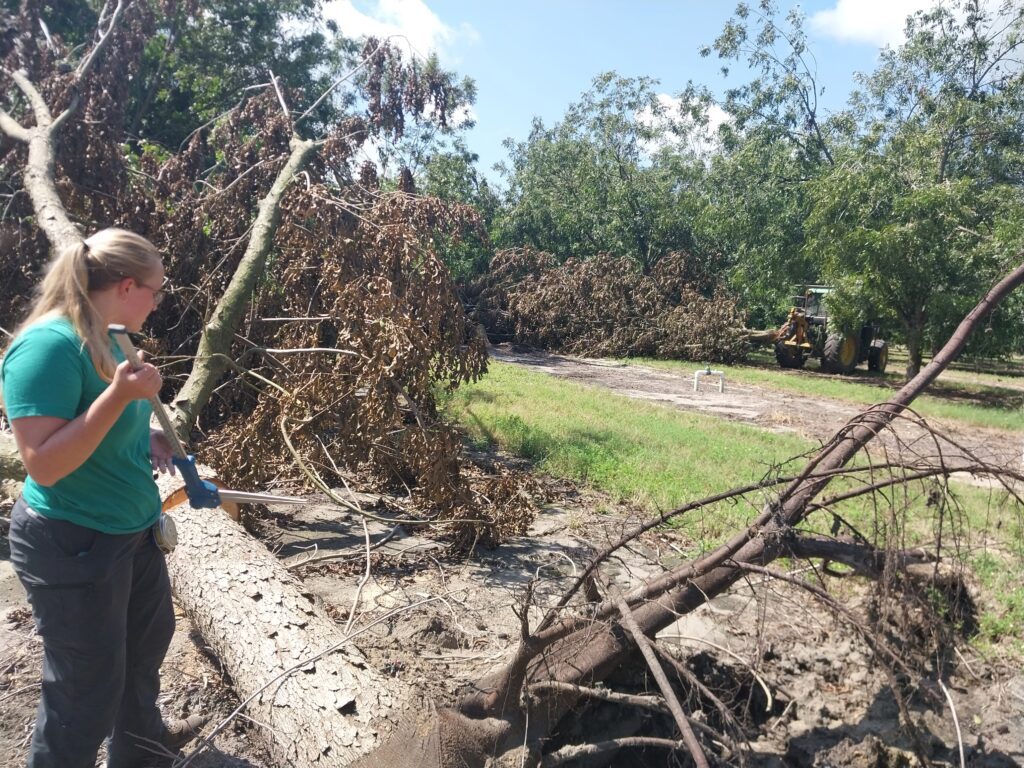
Pecan orchards are a vital part of southern Georgia’s working landscapes, but recent hurricanes have caused severe losses to growers. In a post-storm field study, our lab surveyed over 1,100 trees across 11 orchards following Hurricane Idalia to understand patterns of wind damage. We found that intermediate-sized trees were most vulnerable and that orchard age structure plays a key role in storm resilience. These findings provide a foundation for climate-smart practices that can reduce risk and improve long-term sustainability.