
New study: Predicting spatial patterns of litter fuels for fire behavior modeling
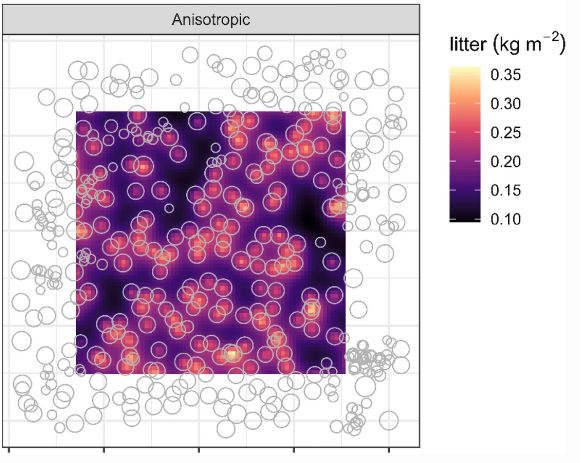
UGA graduate and Landscape Ecology lab alumnus Suzie Blaydes recently published a new article in the journal Fire Ecology. The article uses long-term data and geospatial methods to predict litter fall in longleaf pine forests. The findings will contribute to the next generation of spatilly-explicit fuel and fire models
Ichauway Forest Dynamics Plot included in global Smithsonian network
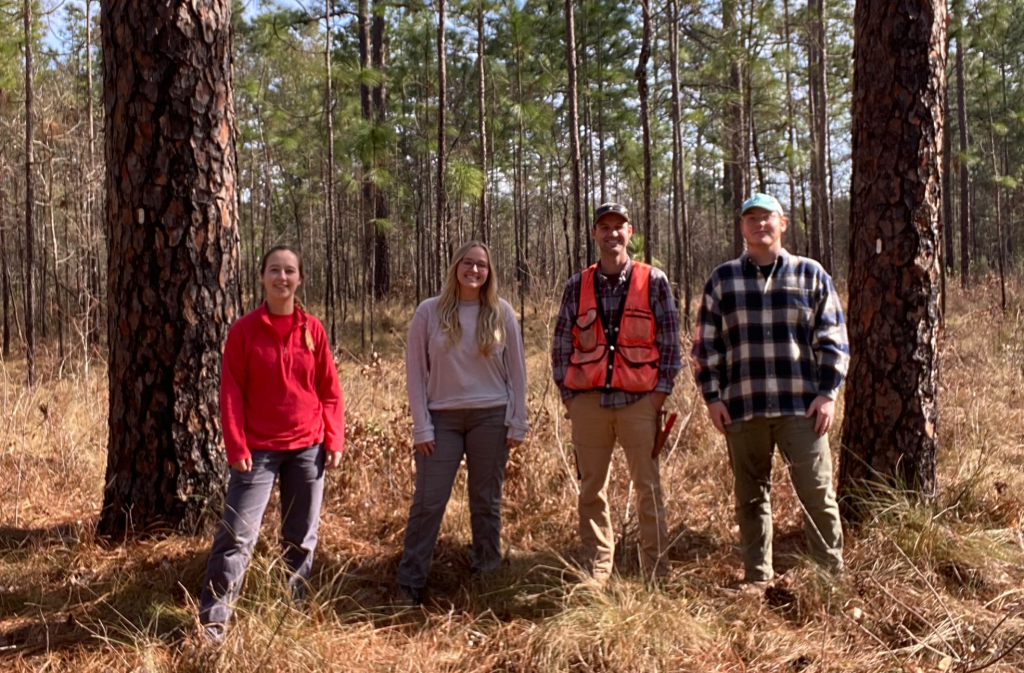
The Ichauway Forest Dynamics plot is a 40 acre research plot in a longleaf pine-oak woodland which consists of 18,000+ mapped trees over 1 cm in diameter. The new infastructure will support long-term research in longleaf pine and fire dynamics in the southeastern U.S.
Zampieri awarded SAF Mollie Beattie Scholarship

The Society of American Foresters named Dr. Nicole Zampieri among two 2023-2024 Mollie Beattie Visiting Scholars. Nicole is a post-doctoral researcher at Tall Timbers Research Station and the Jones Center at Ichauway Landscape Ecology Lab. Her current work investigates patterns of mortality in pine-oak savannas and uses dendrochronology techniques to understand patterns of disturbance. She also plays an important role in guiding and mentoring the research of fellow labmates and beyond. Congratulations, Nicole!
New study: Longleaf pine woodlands increase streamflow during droughts
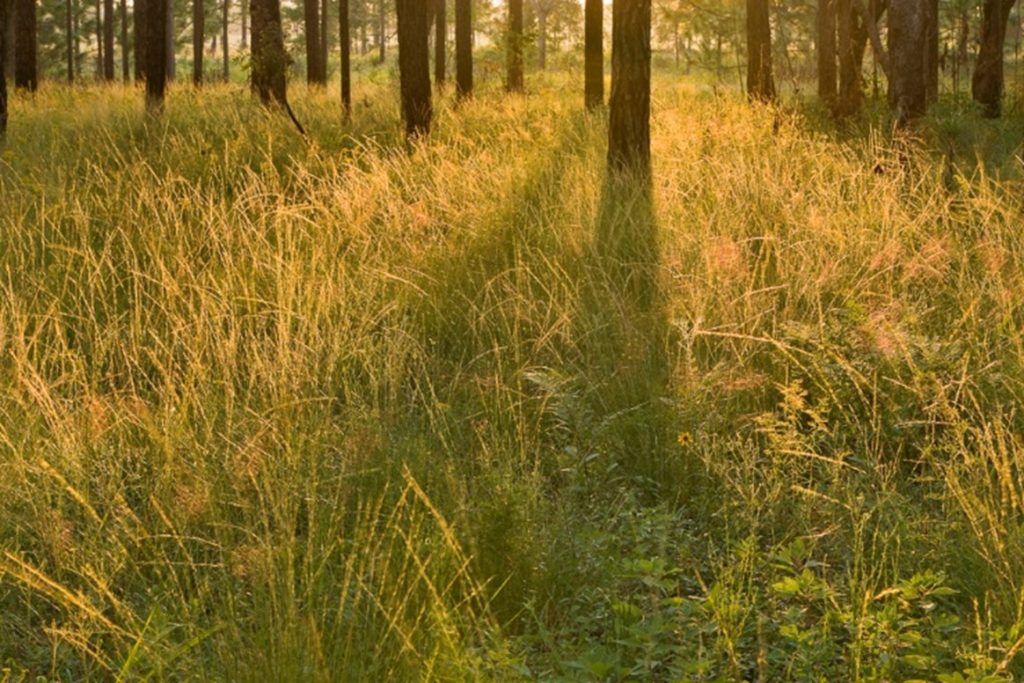
Jones Center researcher Dr. Seth Younger found that longleaf pine woodlands increase water yeidl during droughts. The study looked at 21 rural watersheds with varying levels of longleaf pine cover and found that those with high longleaf pine cover had 17% higher stream flow than those with low cover. The increase was even higher during critical drought periods, highlighting how longleaf pine restoration can improve conservation outcomes on land and in streams.
Sen. Ossoff visits Ichauway, launches bill to improve data collection
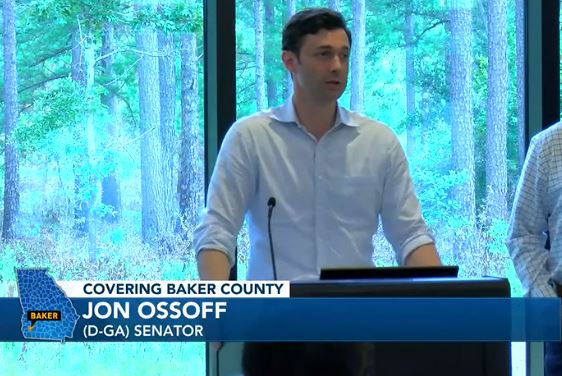
Sen. Jon Ossoff visited the Jones Center at Ichauway to announce a bill that would improve data collection efforts of the US Forest Service. The new bill would authorize USFS to collect data on above and below ground carbon and adopt new technologies such as lidar. The bill is expected to improve data collection within the USFS Forest Inventory and Analysis.
PBS features Landscape Ecology Lab’s tree winching research
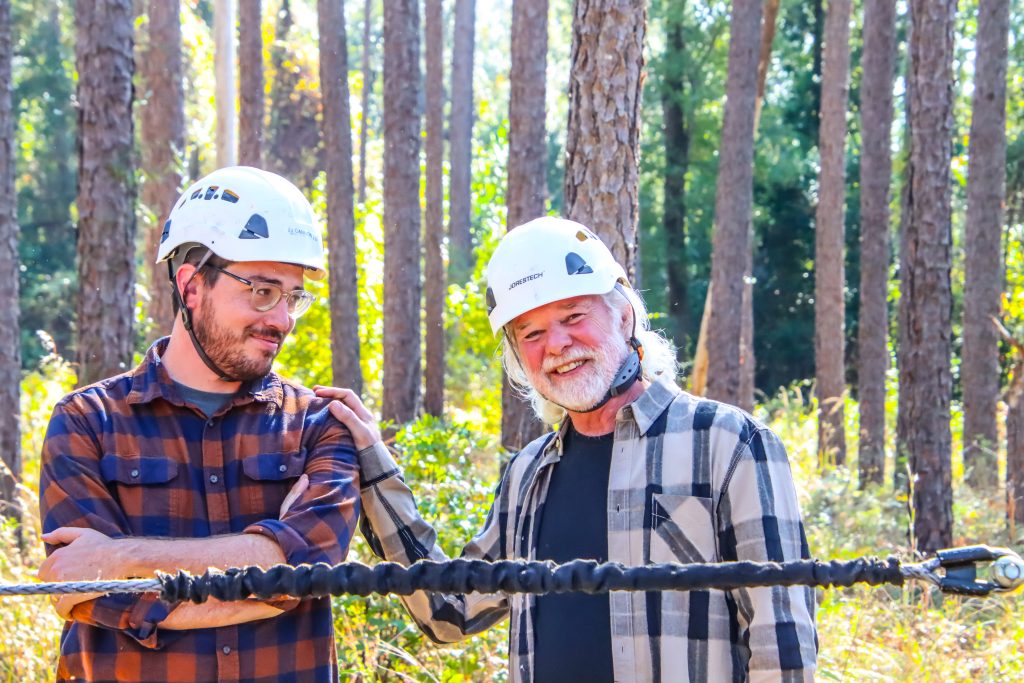
Chuck visits the Jones Center at Ichauway and chats with Director Dr. Kier Klepzig about their work on the 30,000-acre property. They join Dr. Jeff Cannon in the field and help him with a bit of hands-on research into how much hurricane wind force it takes to fell a longleaf pine.
New study: Longleaf pine resilience after Hurricane Michael
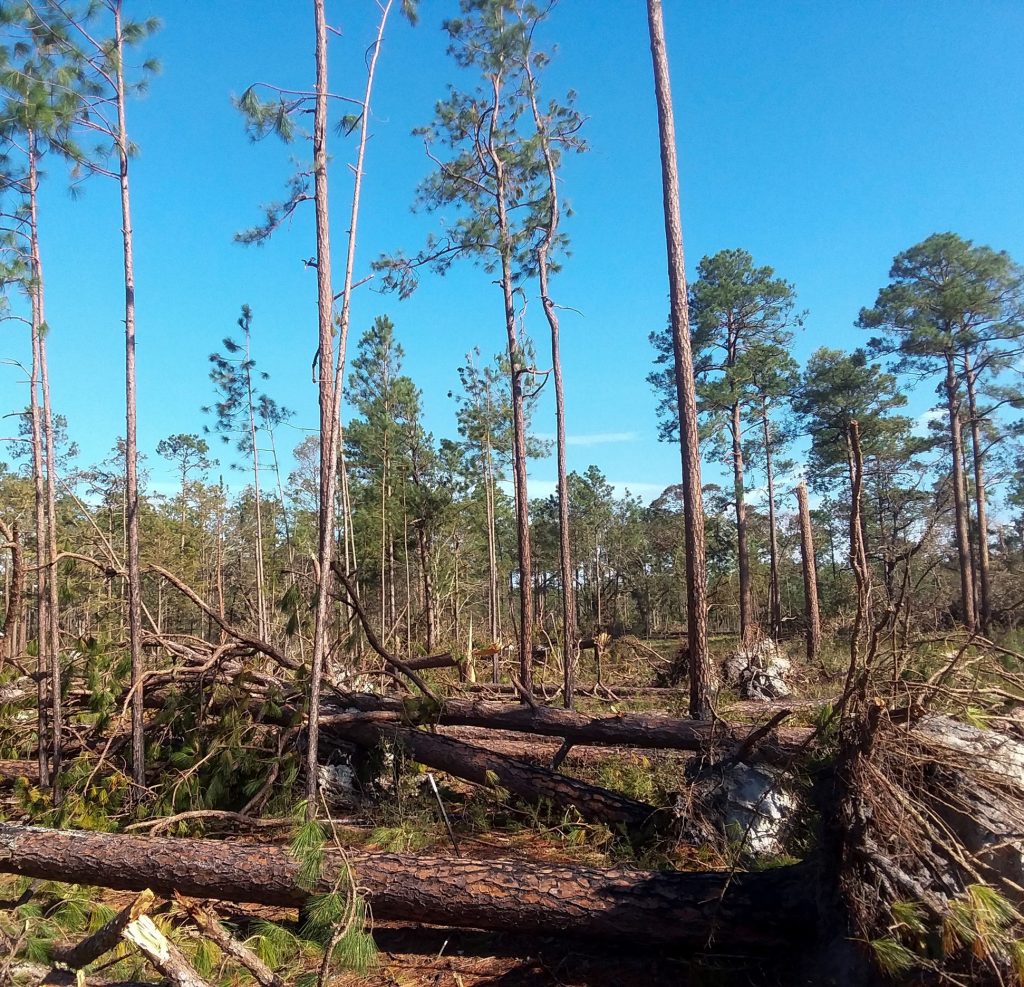
A new study led by University of Florida and Landscape Ecology lab alumnus Cody Pope was published in the journal Forest Ecology and Management. The study examined growth of longleaf pine and associated oak saplings for 2 years after hurricane Michael, and found that canopy removal may benefit longleaf pine over competing oak species, indicating that hurricanes may reinforce and stabilize longleaf pine dominace in frequent-fire forests.
New study: Measuring complex forests with airborne lidar

A recent study from the Landscape Ecology lab led by Andy Whelan explores a new approach to improve large-scale measurements of forest structure using lidar. The study explored the use of “volumetric pixels” (or voxels) which have shown promise for forest measurement. The technique led to accurate estimates of wood volume, even when forest composition was unknown.
Plant Ecology Lab participates in frosted elfin translocation
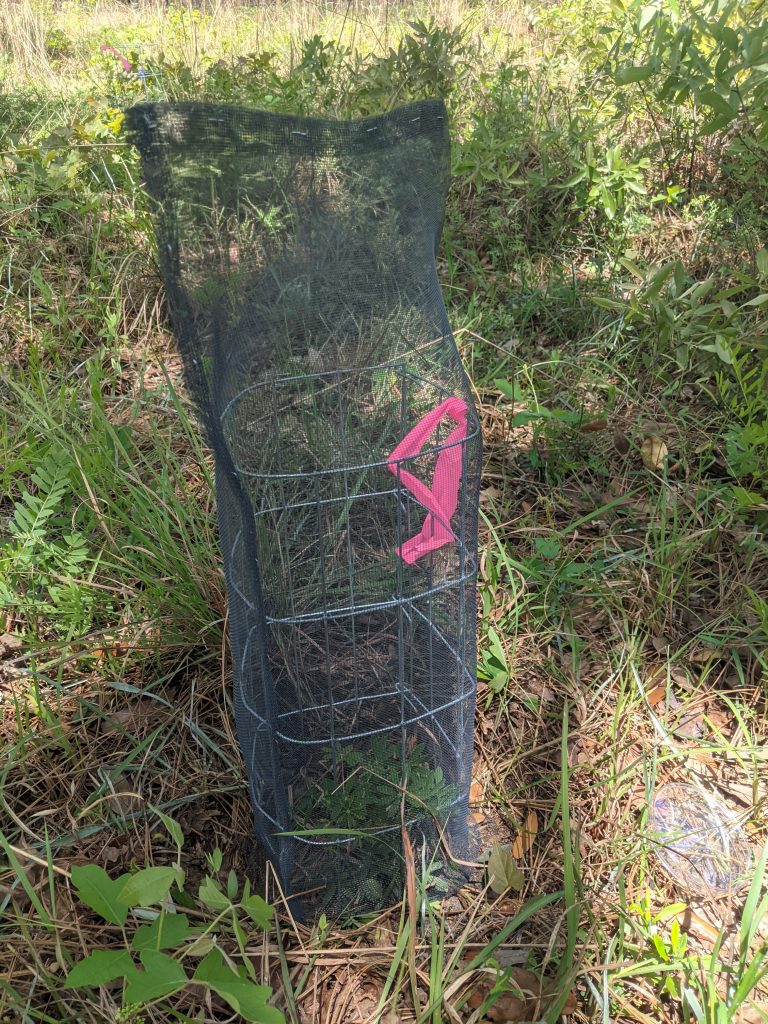
Frosted elfin butterflies are thought to be extirpated in Georgia. The Jones Center and Tall Timbers are working together to establish a sustainable population of this species at Ichauway. We moved 30 caterpillars from the Apalachicola National Forest near Tallahassee, FL to Ichauway in April 2022. We also plan to release 30 adult butterflies in […]
Plant Ecology Lab receives Marie Mellinger Field Botany Grant
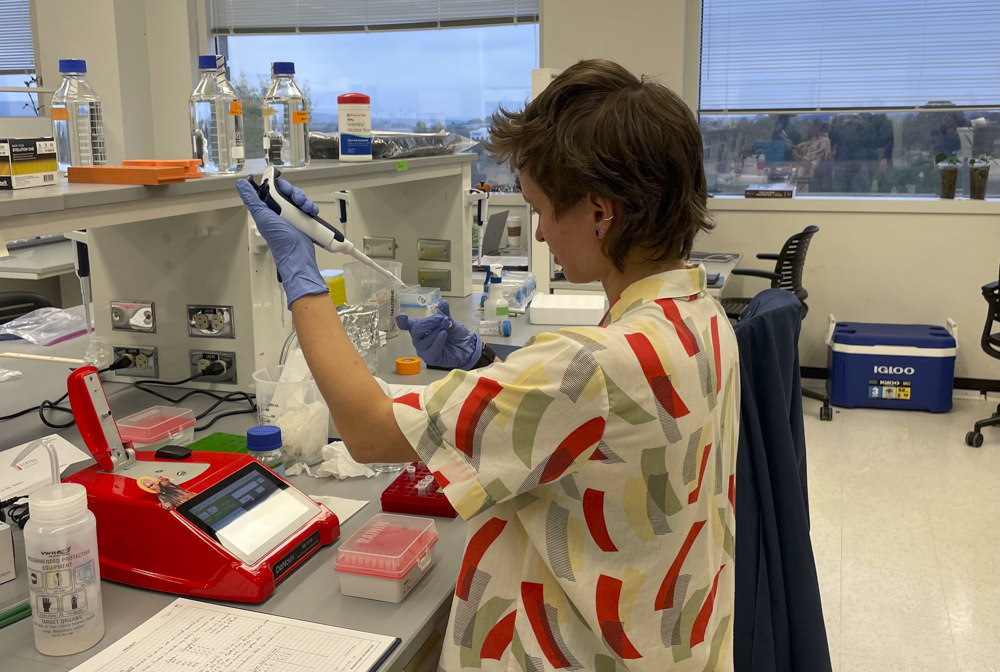
The Plant Ecology Lab, in collaboration with the HudsonAlpha Institute of Biotechnology, received a grant from the Georgia Botanical Society to examine the genetics of one of our federally endangered plants, pondberry.